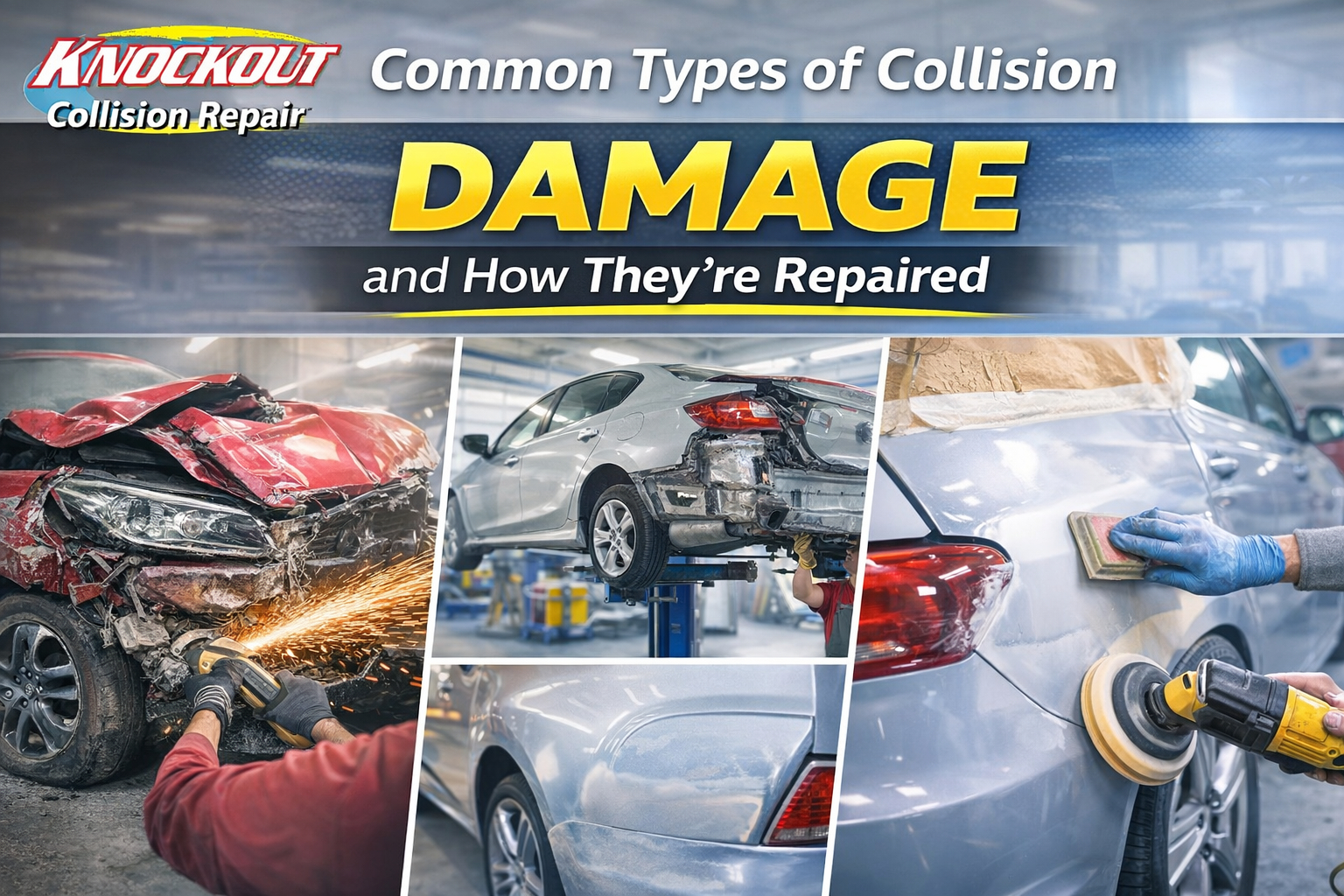
Car accidents often occur abruptly, leaving drivers stressed and unclear about the damage to their vehicle. While some collision damage is evident, other issues may lie beneath the surface.Understanding the most frequent types of collision damage and how they are fixed will allow you to make informed decisions and guarantee that your vehicle is restored safely and correctly.
1. Dent and Surface Damage
Dents and minor body damage are among the most common results of low-speed collisions, parking lot accidents, or minor fender benders. These often affect doors, fenders, bumpers, or quarter panels. While the damage may appear cosmetic, it can sometimes impact underlying panels.
How it’s repaired:
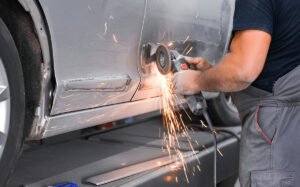
For minor dents without paint damage, paintless dent repair (PDR) may be used. This technique gently reshapes the metal without repainting. Deeper dents or damaged paint typically require traditional body repair, which includes reshaping the panel, applying filler, sanding, and repainting to restore a factory-quality finish.
2. Bumper Damage
Bumpers are designed to absorb impact, making them especially vulnerable in collisions. Cracks, dents, or misalignment in bumpers are common even in low-impact accidents. Modern bumpers often contain sensors and reinforcement bars that can also be damaged.
How it’s repaired:
Depending on the severity, bumpers may be repaired or replaced. Minor cracks and dents can sometimes be fixed, while extensive damage usually requires replacement. After installation, the bumper is painted and calibrated to ensure safety sensors function correctly.
3. Frame and Structural Damage
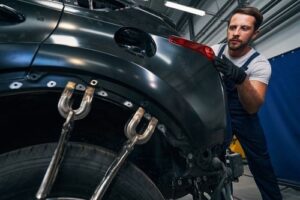
Frame or structural damage is one of the most serious forms of collision damage. It occurs when the vehicle’s structural components are bent or misaligned, often after a high-impact collision. This type of damage can compromise vehicle safety and handling.
How it’s repaired:
Technicians use computerized measuring systems and specialized frame-straightening equipment to realign the vehicle to manufacturer specifications. Proper structural repair is critical to ensure the car performs safely in future accidents.
4. Suspension and Alignment Damage
Collisions can damage suspension components such as control arms, shocks, struts, or steering systems. Even if the car appears drivable, you may notice pulling, uneven tire wear, or difficulty steering.
How it’s repaired:
Damaged suspension parts are replaced or repaired, followed by a professional wheel alignment. This restores proper handling, stability, and tire performance while ensuring a safe driving experience.
5. Paint and Finish Damage
Scratches, chipped paint, and peeling clear coat often occur during collisions. Exposed metal can lead to rust if not addressed promptly, making timely repair important.
How it’s repaired:
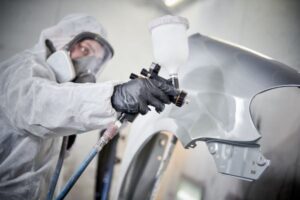
The damaged area is sanded, primed, and repainted using color-matching technology to ensure a seamless blend with the rest of the vehicle. A clear coat is applied to protect the paint and restore shine.
6. Glass Damage
Cracked or shattered windshields, side windows, and rear glass are common in accidents. Even small cracks can weaken structural integrity and reduce visibility.
How it’s repaired:
Minor chips may be repaired, but larger cracks typically require full glass replacement. New glass is installed using industry-approved adhesives to ensure safety and prevent leaks.
7. Electrical and Sensor Damage
Modern vehicles rely heavily on electronic systems, including airbags, cameras, parking sensors, and collision-avoidance technology. These components can be damaged or knocked out of calibration during an accident.
How it’s repaired:
Technicians diagnose electrical issues using advanced scanning tools. Damaged components are repaired or replaced, and systems are recalibrated to meet manufacturer safety standards.
8. Hidden Damage
Not all collision damage is visible. Internal components, brackets, and safety systems can be affected even in minor accidents, posing risks if left unrepaired.
How it’s repaired:
A thorough inspection is performed after disassembly to identify hidden damage. Repairs are completed before reassembly to ensure the vehicle is safe, reliable, and structurally sound.
Conclusion
Collision damage can range from minor cosmetic flaws to significant structural issues. Professional collision repair guarantees that all visible and concealed damage is repaired appropriately, utilizing the proper tools, techniques, and safety regulations. Choosing a reputable collision repair company like ours protects your vehicle’s performance, value, and, most importantly, your safety.