Have you ever picked up your Ford and still wondered whether the vehicle was repaired the way Ford intended?
That question follows many owners after a collision. Late-model Ford vehicles use complex materials, sensors, cameras, radar units, and software-linked safety systems. If you are comparing estimates, a Ford-certified collision repair center in Chico gives you a stronger starting point because certification ties the repair process back to Ford repair methods, equipment standards, and technician training. That affects safety, finish quality, system performance, and vehicle condition.
What Makes a Ford Certified Collision Repair Center in Chico Different
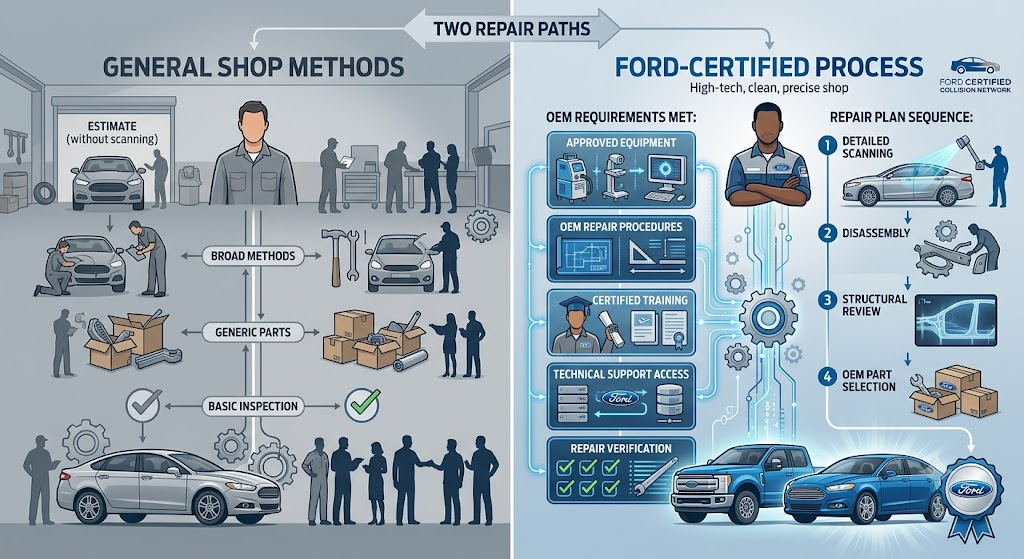
A certified center does not advertise brand familiarity alone. It works inside a stricter repair process. Ford says certified collision centers must meet OEM requirements for approved equipment, repair procedures, technician training, repair verification, and access to Ford technical support. That creates a gap between a factory-aligned repair and a shop that uses broad methods.
Certification also changes how the estimate is built. A proper repair plan starts with scanning, disassembly, structural review, and part selection.
How a Certified Repair Center Brings Long-Term Value to Vehicle Owners
Collision repair is not only about appearance. It also affects crash performance, driver-assist features, road feel, corrosion protection, and resale. A disciplined OEM-led process reduces risk.
Accurate Repairs That Match Factory Standards
Ford publishes detailed procedures for weld points, sectioning limits, material handling, corrosion control, and structural measurements. A shop that follows those procedures works from technical direction, not habit. That is why many owners ask whether the shop operates as a Ford-certified collision repair center in Chico, even when two estimates look close on paper.
A repair can look right and still miss structural work. Factory repair methods help prevent poor panel gaps, wind noise, paint mismatch, and premature corrosion.
Better Safety with Proper ADAS Calibration at a Ford-certified Collision Repair Center in Chico
Advanced driver assistance systems changed collision repair. Cameras, radar sensors, lane alerts, and automatic braking features all depend on exact placement and calibration. IIHS has reported that repairs involving ADAS often require calibration, and those repairs often cost more because sensors and cameras need recalibration after collision damage.
When a shop repairs the windshield area, bumper assemblies, suspension components, or front-end structure, calibration becomes part of the repair. That is one reason a Ford-certified collision repair center in Chico offers more than body and paint work.
Use of Genuine Ford Parts and Approved Materials
Parts selection shapes repair quality more than many owners expect. Genuine Ford parts and approved materials support proper fit, mounting integrity, finish quality, and system compatibility. Aftermarket alternatives may work in some cases, but they do not always match original dimensions or attachment points.
Problems show up fast: uneven trim, wider gaps, shifted brackets, or moisture entry.
Trained Technicians for Modern Vehicle Systems
Vehicle construction has grown more technical. Shops now deal with mixed materials, hidden electronics, coded parts, sensor networks, and software-linked systems that affect the repair plan from the start. Training keeps technicians from applying old habits to newer models.
We see that challenge often at Knockout Collision Repair because newer Ford vehicles need more than cosmetic work after an impact.
Faster Insurance Coordination and Claims Handling
Insurance delays often begin when repair documentation lacks detail. Certified shops usually document damage more thoroughly, support supplements with better evidence, and explain why certain procedures belong in the repair plan. That helps move claims forward with fewer disputes.
Many drivers look for a Ford-certified collision repair center in Chico for that reason. Claims can drain time and patience when the shop and insurer do not align on repair requirements.
Higher Resale Value After Professional Repairs
Buyers and trade-in evaluators notice repair quality. They look at warning lights, panel alignment, paint texture, scan history, and how the vehicle drives. They may not say much, but they price those details.
A professional repair does not erase accident history, but it can protect how the vehicle presents and performs afterward.
Why Vehicle Owners in Chico Choose Knockout Collision Repair
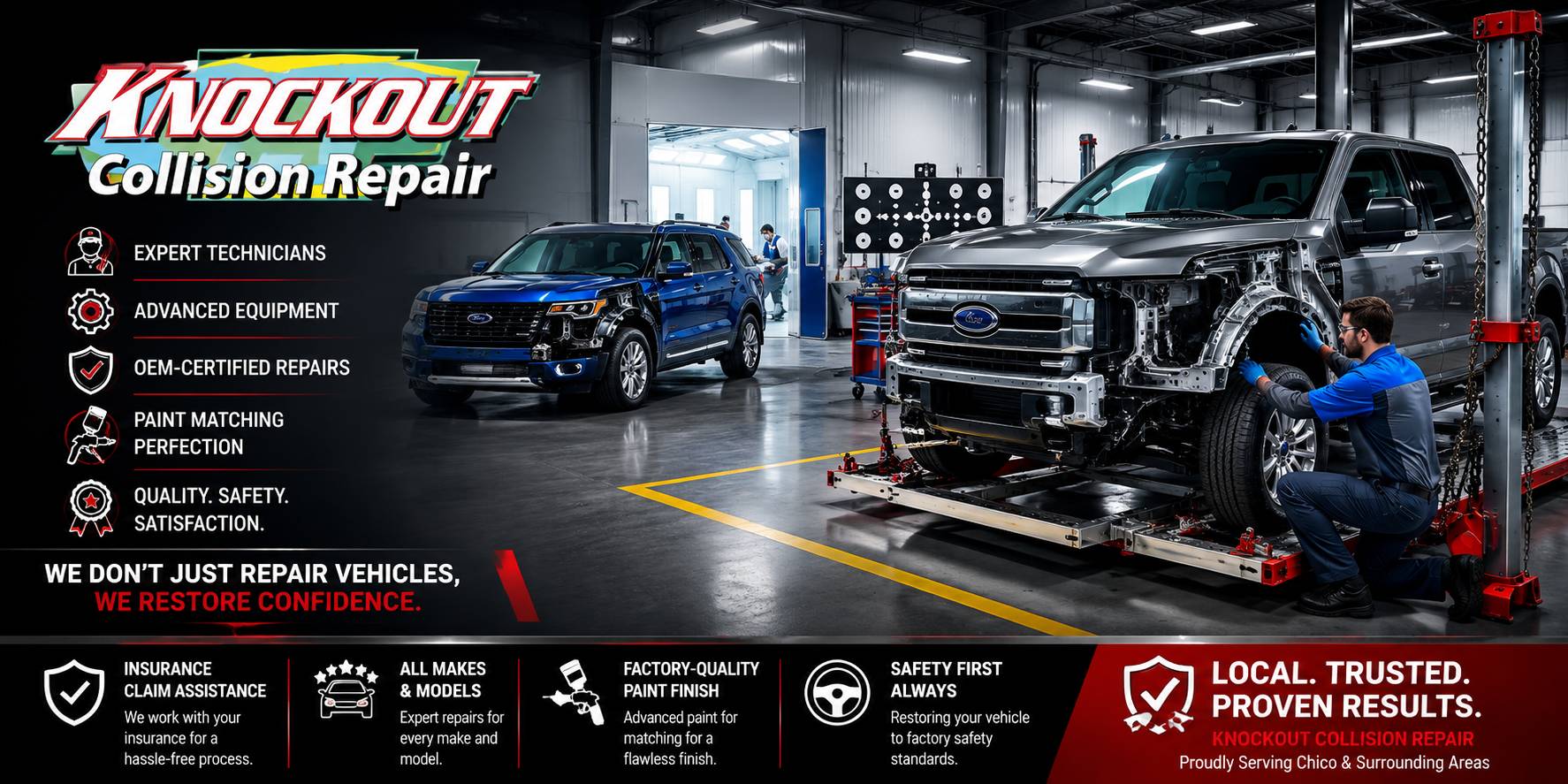
Knockout Collision Repair is the business behind the Ford certification page, not a separate listing. The shop has served Chico since 1999 as a family-owned collision center, and its Ford-certified status carries value for owners of F-150, Mustang, Explorer, Escape, Expedition, and Super Duty models.
Services extend beyond panel repair and include dent work, frame correction, alignment, glass replacement, detailing, and collision restoration. The local reputation also comes from communication, repair planning, and help during insurer back-and-forth for owners.
We handle the repair path in one place, which helps when damage touches the structure, finish, glass, or calibration.
What stands out most:
- Ford-focused repair procedures, trained technicians, and equipment aligned with manufacturer requirements
- Genuine parts emphasis, advanced repair technology, insurance claim assistance, and a customer-first approach backed by local experience
That combination gives owners more continuity from estimate to delivery.
What to Check Before Finalising a Collision Repair Center
Before you approve repairs, compare shops on process, not promises.
| Checkpoint | What You Should Ask | Why It Counts |
| Certification | Is the shop Ford-certified for collision repair? | Certification ties the work to OEM procedures and training |
| Repair Planning | Will the shop perform full disassembly and scanning? | Hidden damage often appears after teardown |
| Parts | Will genuine Ford parts be used when required? | Part fit and system compatibility affect the finished repair |
| Calibration | Will ADAS systems be scanned and recalibrated? | Safety features rely on precise sensor performance |
| Documentation | How will supplements and insurer communication be handled? | Good documentation reduces avoidable claim delays |
Ask how the shop handles post-repair verification. Ask who performs calibrations. Ask whether the estimate includes corrosion protection, structural checks, and necessary scans. We believe owners should hear plain answers before they authorize repairs.
Conclusion
A collision repair decision should go beyond paint, price, and speed. Your Ford was engineered to perform a certain way before the accident, and the repair should respect that standard after the work is complete. Choosing a Ford-certified collision repair center in Chico gives owners a better path to procedures, calibration, stronger parts fit, and smoother claim coordination.
If you want your Ford repaired with care and verified methods, contact our team and let us help you move ahead with a repair plan built to protect the vehicle.
FAQs
Can I choose my own collision shop after a Ford accident?
Yes. Even if an insurer gives you a list, the repair shop is still your call.
Will my Ford need a scan after minor damage?
Usually, yes. Small hits can still affect sensors, warning systems, or store fault codes in the vehicle.
Do certified shops always cost more?
Not always. The final cost usually comes down to damage, parts, labour, and whether calibration is needed.
How long does Ford collision repair usually take?
It depends on the damage and parts supply. Some jobs move fast, while others take longer if the repair is more involved.
Should I worry about resale after a repaired accident?
Yes, a poor repair can hurt resale later, which is why repair quality and proper parts do make a difference.