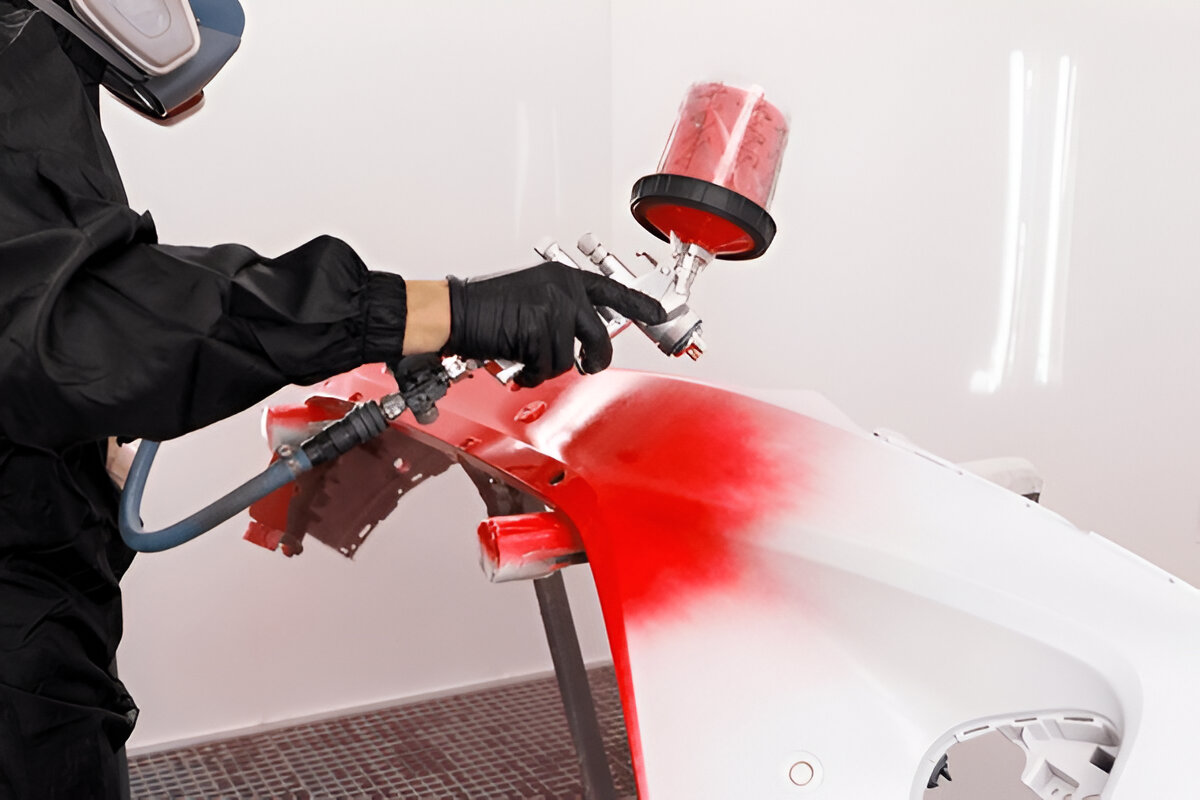
Car paint can be touched up with do-it-yourself kits available at any well-stocked automotive supply store. This type of solution is useful for temporary repairs or minor paint damage. For example, a few minor cracked paint patches caused by road debris or gravel can be easily restored. Although DIY is possible, finer treatments for more significant blemishes necessitate expertise. Severe damage, such as rust or oxidation corrosion, should be handled by a skilled automobile painter. Below, we cover the fundamentals and various solutions for properly touching up automotive paint.
Steps to Touch Up Car Paint
Touching up car paint restores the original look, repairs paint chips, and prevents rust. Using the correct paint color and paint code guarantees a good match with your vehicle’s finish. A touch-up paint pen works well for small chips, but bigger chips may necessitate several layers or a fresh coat. Proper surface preparation using wax and grease remover ensures that the paint adheres smoothly. A clear finish is applied thereafter to safeguard and ensure the repair’s endurance. Regular maintenance ensures that your touch-ups are flawless and that the paint does not flake with time.
To help you ensure proper touch-up, follow these steps:
- Clean the surface
Begin by thoroughly washing the car, paying special attention to the damaged areas. Apply glass cleaner and dry with a microfiber towel. Possible mistake: Failure to thoroughly clean can leave dirt or grease, resulting in poor paint adherence or bubbling.
How to Avoid It: Double-check the surface under light before drying to ensure there is no residue.
- Inspect and mark damage
Examine your vehicle under bright illumination and mark issue spots with masking tape. Possible error: Ignoring tiny chips can lead to incomplete restorations.
How to Avoid It: Examine places prone to damage, such as door edges and bumpers, and indicate any scratches you discover.
- Sand the damaged area
To smooth the chip and eliminate any shiny surface, use sandpaper with grits of 1500-2500. Possible mistake: Sanding too hard may damage the surrounding paint or deepen the chip.
How to Avoid It: Sand with soft, short strokes until the surface feels smooth and dull.
- Apply Paint Thinner
To clean the sanded area, use a cotton swab dampened with automotive paint thinner. Possible error: Using too much thinner may damage the car’s paint around the repair spot.
How to Avoid It: Apply the thinner sparingly and solely on the sanded area.
- Apply Touch-Up Paint
Use a fine-tipped brush to apply the base coat to the affected areas. Possible mistake: Applying too much paint at once can cause clumping or leaking.
How to Avoid It: Build up the paint in small layers, allowing each layer to dry before applying the next.
- Build Up Paint for Deep Chips
If the chip is deep, use many coats to ensure an equal surface. Possible error: Rushing can leave the surface uneven, making the repair stand out.
How to Avoid It: Take your time and allow each coat to dry before applying the next.
- Apply the clear coat
Once the base coat is dry, apply a clear coat in thin, equal layers. Possible mistake: Using too much clear coat at once can result in streaks or an uneven finish.
How to Avoid It: Apply in small layers and allow to dry before adding more coats.
- Allow Time to Cure
Allow the paint to dry and solidify completely for at least 48 hours. Possible mistake: Handling the vehicle too soon can smudge or harm the paint.
How to Avoid It: Avoid driving, washing, or touching the mended area until it has completely cured.
- Polish the area
After the paint has dry, use a polishing compound to restore a glossy finish. Possible mistake: Over-polishing can remove the new paint.
How to Avoid It: Use mild pressure and polish until the mended area merges in with the rest of the surface.
Does Car Paint Touch-Up Pen Work?
Touch-up paint pens are suitable for repairing small chips or light scratches that are less than 1/2 inch long. They are very excellent for preventing small damage from spreading, especially on less apparent surfaces such as door edges, bumpers, and trims. They provide a practical and portable option, but their effectiveness is limited.
Advantages
- Easy to apply with little tools
- Prevent minor chips from turning into rusty patches
- Affordable and readily available.
Disadvantages
- Color matching can be challenging, particularly if the vehicle’s paint has deteriorated.
- If applied incorrectly, it might result in streaks or blobs.
- Unsuitable for serious scratches or big areas requiring sanding and layering.
Touch-up paint pens are not suited for major blemishes because they require sanding and numerous layers to restore properly. Imperfections are more visible in high-traffic areas, making a smooth finish difficult to achieve.
Trust professionals at Knockout Collision Repair
Touching up your car’s paint is critical for keeping its appearance and protecting it from long-term damage, such as corrosion. While DIY kits and touch-up pens are fantastic for little chips or light scratches, larger damage frequently necessitates professional assistance to obtain a flawless finish. Knockout Collision Repair specializes in excellent paint repair and restoration services, guaranteeing your vehicle appears like new. Whether you require a fast touch-up, paint correction, or a full repaint, our crew has the tools and skills to handle any type of damage with accuracy. Furthermore, we provide a lifetime warranty on all of our paint and repair work, allowing you to drive away with confidence.