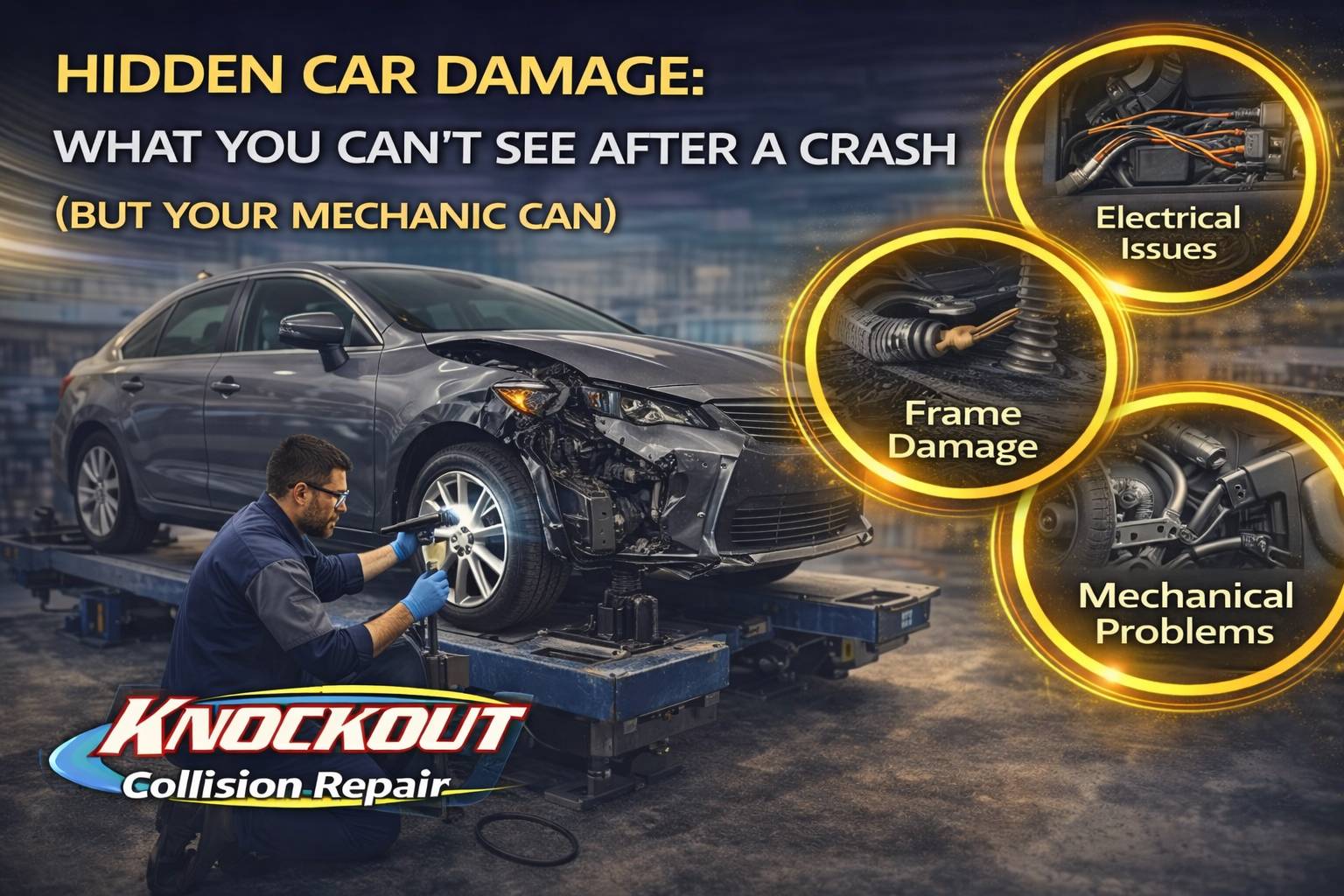
Things happen, and even a little fender bender can make you feel bad. When you look at your car again, you might think, “It’s just a scratch, no big deal.” But here’s the truth: not all damage is easy to see, and if you don’t fix it, it could cost you a lot of money later on.
Let’s take a closer look at what often goes wrong after a crash and why it’s so important to have a professional mechanic check it out.
1. Damage to the frame and structure
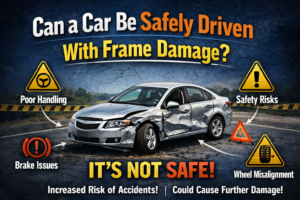
The frame or chassis of your car could be bent or twisted, even if it looks fine on the outside. The frame is the most important part of your car. It keeps everything, from the doors to the suspension, in the right place.
Why it matters:
- Structural problems can make it less safe in future crashes.
- When frames are not lined up correctly, tires wear unevenly and steering becomes difficult.
Only a professional with the right tools can find frame damage. If the frame needs to be straightened, they will measure it and do so. This will stop problems from happening in the future.
2. Problems with the suspension that aren’t obvious
When you get into an accident, your car’s suspension system takes the most damage. You can’t always see control arms, struts, tie rods, or shocks, but even a small accident can damage them.
Why it’s important:
- A broken suspension makes handling, comfort, and tire life worse.
- Driving with problems with the suspension that you can’t see raises the risk of accidents.
- Mechanics can do alignment tests and visual inspections to find small suspension problems before they get worse.
3. Damage to the Engine
Impacts can shake or break important parts of the engine, radiators, or belts. A small crash in the front of your car might not leave any obvious damage, but it could have leaks, bent mounts, or a broken radiator.
Why it matters:
- If engine damage isn’t found, it could cause the engine to overheat or break down.
- Even small leaks can worsen over time, costing more to repair.
- A certified mechanic will open the hood and look for problems that are not visible from the outside.
4. Problems with the electrical system
There are a lot of electronics in modern cars, like cameras, sensors, airbags, infotainment systems, and more. A crash can break sensors or wiring without leaving a mark.
Why this is important:
- Bad sensors can mess up the brakes, airbags, or stability control.
- Electrical issues might trigger warning lights or lead to system failures later.
- You need professional diagnostic tools to find and fix these hidden electrical problems.
5. Damage to the body that is cosmetic vs. damage that is subtle
Not every dent, scratch, or paint chip tells the whole story. Sometimes, the panels are a little bent or out of line, or the paint layers have cracks that aren’t easy to see.
Why it matters:
- Over time, small cosmetic problems can cause rust.
- Panels that aren’t lined up right could hurt the aerodynamics and resale value.
- A body shop inspection makes sure that your car not only looks good, but also stays safe from damage over time.
The Bottom Line
Even though your car may “look fine” after a crash but there may be a few damages which you might not see. You might save a day at the shop by not having a professional check your car, but it could cost you a lot more in safety risks, repairs, and even resale value later on.
Our trained technicians at Knockout Collision Repair use the latest tools and their knowledge to find hidden problems, fix them the right way, and make sure your car is safe and reliable again, both inside and out. Remember that it’s always better to get your car checked today than to feel bad about it tomorrow. It’s worth it for your safety and your car.