When a vehicle is involved in a collision, even a minor one, the impact can cause hidden structural damage. One of the most critical yet often overlooked issues is frame misalignment. A bent or twisted frame affects how a vehicle drives, steers, and responds on the road. Frame straightening is a specialized repair process designed to restore the vehicle’s structural integrity, alignment, and handling, ensuring safety and performance are brought back to factory standards.
Understanding Vehicle Frame Alignment
A vehicle’s frame serves as its foundation. It supports the engine, suspension, body panels, and safety systems. Proper frame alignment ensures that all components sit in the correct position and work together smoothly. When the frame is out of alignment, even by a small margin, it can cause uneven weight distribution, pulling to one side, steering wheel vibration, and poor handling. These issues may not always be immediately visible, but they significantly impact driving comfort and control.
How Collisions Affect Alignment and Handling?
During an accident, the force of impact transfers through the vehicle’s structure. This force can bend, twist, or compress the frame, throwing off the alignment of the wheels and suspension. As a result, drivers may experience difficulty steering, increased tire wear, and reduced stability—especially at higher speeds or during sudden turns. In some cases, the vehicle may no longer track straight, making it harder to maintain control and increasing the risk of future accidents.
The Frame Straightening Process Explained
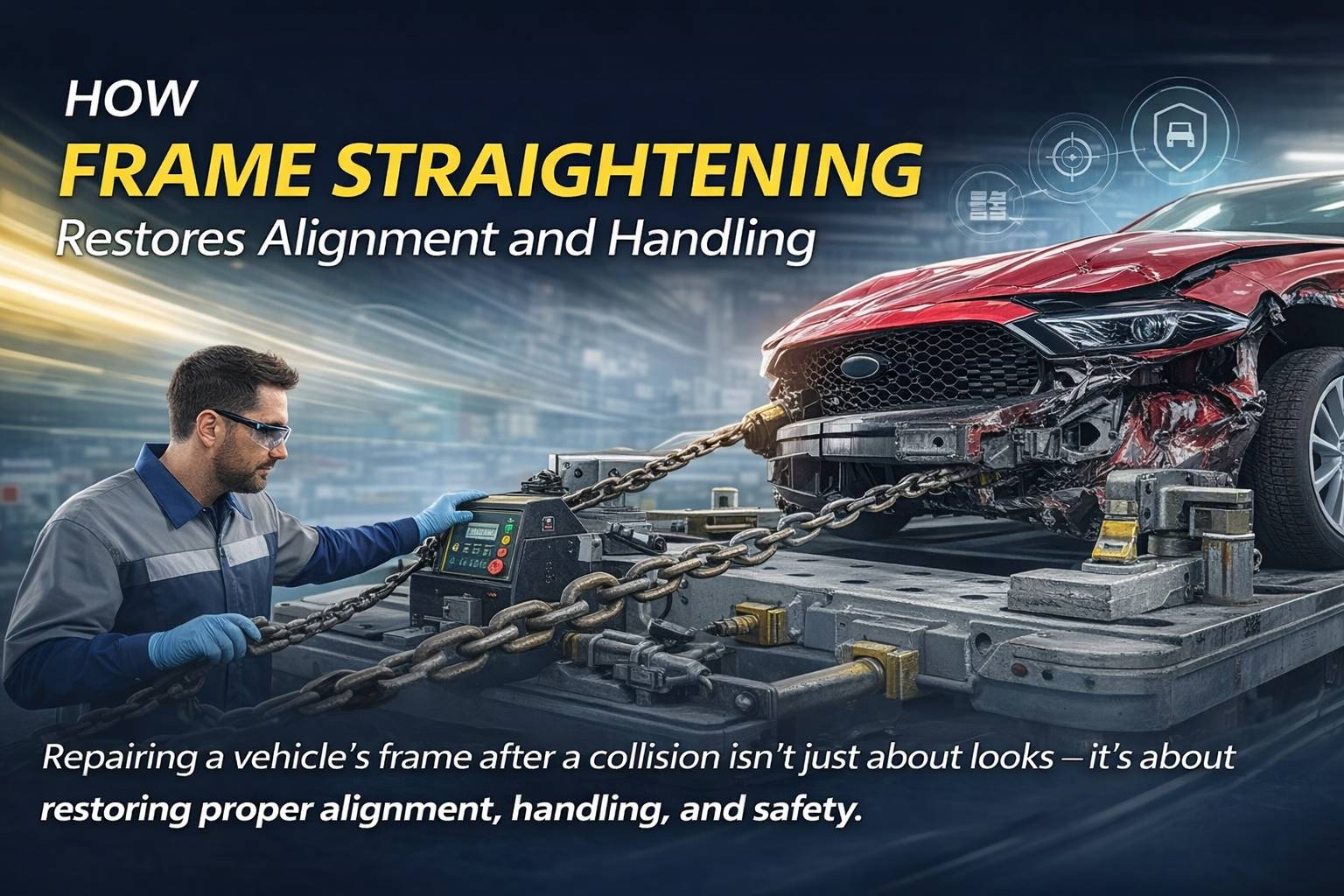
Frame straightening involves using advanced equipment to measure and correct structural damage. Modern repair facilities rely on computerized measuring systems that compare the vehicle’s current frame dimensions to manufacturer specifications. Once the damaged areas are identified, technicians use hydraulic frame machines to apply controlled pressure, gradually pulling the frame back into its correct shape. This precise approach ensures the frame is restored accurately without causing additional stress to the metal.
Restoring Wheel and Suspension Alignment
One of the main benefits of frame straightening is the restoration of proper wheel and suspension alignment. When the frame is misaligned, suspension components such as control arms, struts, and axles cannot function as intended. Straightening the frame allows these components to sit correctly, enabling accurate wheel alignment. This improves steering response, ensures the vehicle tracks straight, and restores smooth, predictable handling on the road.
Improving Vehicle Handling and Stability
A properly straightened frame directly impacts how a vehicle handles. Once the frame and suspension are realigned, the car responds more precisely to steering inputs. Drivers regain confidence in cornering, braking, and accelerating. Stability improves, especially during high-speed driving or emergency maneuvers, as the vehicle maintains balanced contact with the road. This improved handling not only enhances driving comfort but also plays a vital role in overall safety.
Reducing Tire Wear and Mechanical Stress
Frame misalignment often leads to uneven or accelerated tire wear, as the tires are forced to compensate for improper angles. Over time, this can strain suspension and steering components, leading to costly repairs. Frame straightening corrects these underlying issues, allowing tires to wear evenly and reducing unnecessary stress on mechanical parts. This helps extend the lifespan of tires and critical components while lowering long-term maintenance costs.
Supporting Advanced Safety Systems
Modern vehicles rely on advanced driver assistance systems (ADAS) such as lane-keeping assist, collision warning, and adaptive cruise control. These systems depend on accurate alignment to function correctly. Frame straightening ensures the vehicle’s structure is positioned as designed, allowing sensors and cameras to be properly calibrated. Without this step, safety systems may deliver inaccurate readings or fail to perform as intended.
Long-Term Safety and Resale Value
Beyond immediate handling improvements, frame straightening contributes to long-term vehicle safety and value. A properly repaired frame restores the vehicle’s crashworthiness, ensuring it can absorb and distribute impact forces correctly in future accidents. Additionally, documented professional frame repair can help maintain resale value by assuring potential buyers that the vehicle has been restored to safe operating condition.
Conclusion
Frame straightening is a critical repair process that goes far beyond cosmetic fixes. By restoring the vehicle’s structural alignment, it corrects wheel and suspension positioning, improves handling and stability, reduces tire wear, and supports advanced safety systems. Most importantly, it helps ensure the vehicle drives as safely and smoothly as it did before the accident. For any car that has experienced a collision, professional frame straightening is an essential step toward restoring confidence, control, and long-term reliability on the road.