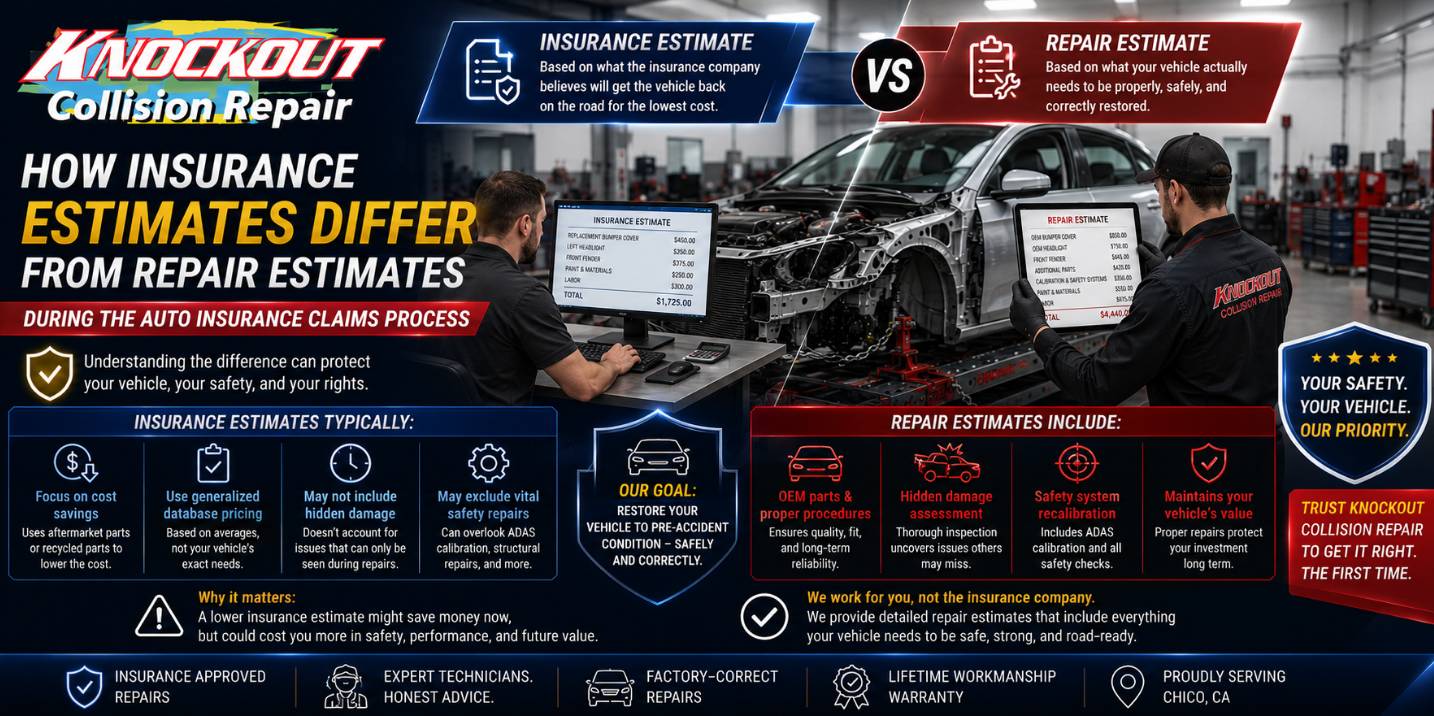
Have you ever opened an insurer’s estimate after a crash and thought, “That cannot cover the whole repair”? You may be right. The first figure usually reflects what an adjuster can see, photograph, or confirm at that stage. A body shop works differently. Technicians remove damaged parts, inspect nearby systems, check factory instructions, and price the work the car needs.
Drivers searching for help with auto insurance claims, Chico often assume the lower figure represents the final bill. In many cases, it only starts the conversation.
Why Insurance and Repair Estimates Often Show Different Costs
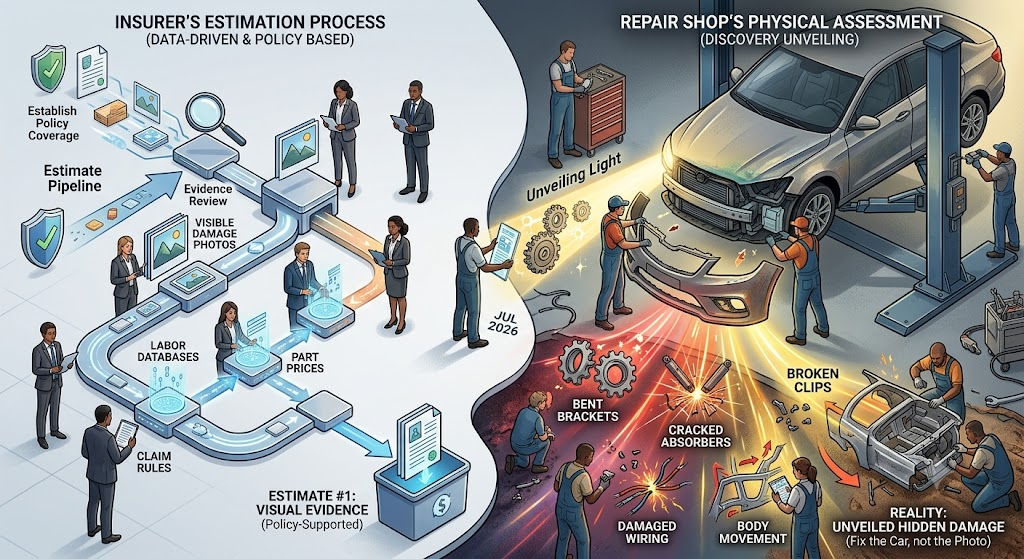
An insurer wants to establish what the policy covers and what the available evidence supports. The adjuster reviews photos, visible damage, labor databases, part prices, and claim rules. The repair shop must fix the vehicle, not price a photograph. Once technicians remove a bumper, lamp, trim piece, or panel, they may find bent brackets, cracked absorbers, broken clips, damaged wiring, or body movement.
The Insurance Information Institute reported that U.S. auto insurers paid more than $260 billion in claims during 2024. Carriers need repeatable systems at that scale, but software cannot predict every hidden sensor, weld, or reinforcement.
What Is Included in an Insurance Estimate vs. a Repair Estimate
| Estimate Area | Insurance Estimate | Repair Estimate |
| Damage review | Visible or submitted damage | Findings from teardown, scans, and measurements |
| Parts | Categories allowed by the policy | Parts chosen for fit, safety, availability, and factory instructions |
| Labor | Database times and carrier assumptions | Shop labor plus required operations |
| Electronics | Limited during the first review | Scans, calibration, testing, and resets |
| Materials | Standard allowances | Actual paint, masking, sealers, and corrosion protection |
| Revisions | Changes after new proof arrives | Changes after disassembly and planning |
For anyone seeking help with auto insurance claims, Chico, the difference usually comes down to evidence. The shop has seen more of the vehicle.
Why Hidden Damage Often Requires Help With Auto Insurance Claims, Chico
A modern bumper may contain parking sensors, radar units, camera brackets, wiring, air guides, a reinforcement bar, and an energy absorber. A small rear impact can disturb several pieces while leaving the painted cover in decent shape.
A crease outside may point to damage inside the shell. A side hit can affect a hinge, latch, window regulator, intrusion beam, or sensor mount.
The adjuster cannot add every possible item without proof. After teardown, the shop records the findings, takes photographs, revises the estimate, and sends the file for review.
How Supplemental Estimates Help Complete Vehicle Repairs
A supplement adds costs that nobody could document during the first inspection. It may cover newly exposed parts, added labor, diagnostic scans, calibration, corrosion protection, refinishing, or a change caused by part availability.
Photos, invoices, measurements, scan reports, and factory repair pages support the request.
Consumer Reports surveyed 40,566 policyholders about insurer performance, including claim handling and settlement experiences. Drivers judge more than the first check. They also remember how the carrier responds when the repair changes.
When OEM Parts, Aftermarket Parts, or Used Parts Affect Pricing
OEM parts come through the vehicle manufacturer’s network. Aftermarket parts come from independent producers. Used parts come from another vehicle. Each option changes price, delivery, warranty, and fit.
The cheapest item on paper may add work later. Poor fit can slow reassembly or leave uneven gaps. Cameras and radar systems may also depend on exact brackets, glass, emblems, grilles, or bumper covers.
Drivers who need help with auto insurance claims, Chico should check the source listed beside each major part. The word “bumper” does not say whether the estimate includes OEM, aftermarket, or recycled material.
Why Labor Rates and Repair Procedures Can Change the Final Cost
Many disagreements start with missing operations rather than the hourly rate.
A carrier may allow time to replace a panel but omit weld testing, seam sealing, masking, corrosion protection, battery support, scanning, or calibration. The shop adds those lines because the manufacturer’s procedure calls for them.
Aluminum work may require separate tools. Structural repairs need repeated measurements. Driver-assistance systems may require static or road calibration.
When help with auto insurance claims, Chico involves a disputed labor charge, the shop needs repair pages, photos, measurements, and scan results. Saying the job takes longer will not carry the same weight.
How Accurate Repair Planning Helps Prevent Unexpected Delays
Repair planning begins before major body work. The shop removes damaged parts, checks one-time-use fasteners, reviews procedures, confirms part numbers, and identifies outside work such as glass replacement or alignment.
A missing sensor bracket offers a simple example. If no one spots it during planning, the car may reach reassembly before the shop orders it. Installation takes minutes. Shipping may take days.
Insurance approval can add another pause while the shop waits for a supplement response.
What Vehicle Owners Can Do Before Approving Repairs
Ask direct questions before signing. Which part categories appear on the estimate? Does the shop expect hidden damage? Who contacts the adjuster? Will the vehicle need scans, calibration, alignment, or structural measurement?
Keep these records together:
- Claim number, adjuster contact, insurer messages, and every estimate version
- Damage photos, towing receipts, rental papers, authorizations, and final invoices
California drivers may choose their repair shop even when an insurer recommends another facility. The owner still makes the final choice.
How Knockout Collision Repair Offers Help With Auto Insurance Claims, Chico
Knockout Collision Repair has served Chico drivers since 1999 as a family-owned local shop. The team works with nearly every insurer, yet it does not operate as an insurer-controlled direct repair facility. That distinction gives the shop room to document repairs around vehicle condition, factory procedures, and safety requirements.
We help customers organize claim paperwork, prepare free professional estimates, speak with adjusters, and submit supplements when teardown exposes added damage. The same team can coordinate towing, frame and unibody work, dent repair, refinishing, and final inspection.
OEM-focused planning, computerized estimating, trained technicians, and a lifetime repair warranty support the work. Customers receive updates through claim review, parts ordering, repair, paint, and delivery.
We explain part differences, repair-choice rights, and estimate changes before customers approve major work. The aim remains straightforward: document the job properly, repair the vehicle correctly, and keep the owner informed without turning every conversation into a sales pitch.
Common Situations That Can Change the Final Repair Estimate
A scan may find a fault without a warning light. A measurement may show structural movement. Paint matching may require blending into the next panel.
Old damage can complicate the claim. Rust, body filler, nonfactory wiring, or an earlier poor repair may affect the new work. The insurer may separate unrelated damage from the covered loss.
Part availability causes problems too. A backordered component may force another approved choice or leave the vehicle waiting. Towing, storage, and rental costs can change while the file remains open.
Ask what changed, what evidence supports it, and whether the insurer approved the added work.
Conclusion
Insurance estimates and repair estimates begin with different evidence. The insurer prices what it can verify under the policy. The repair shop prices what the vehicle needs after teardown, scans, measurements, and procedure review.
Hidden damage, part choices, labor operations, electronics, paint work, and approval time can widen the gap. Drivers looking for help with auto insurance claims, Chico should compare line items, keep each revision, and ask who will handle supplements before repairs begin.
Contact our team, bring the claim information and insurer estimate, and let us review the damage, organize the paperwork, and coordinate the repair from check-in through delivery.
FAQs
Can I request another estimate after the insurer sends payment?
Yes. A repair shop can inspect the vehicle and prepare its own estimate before you authorize work.
Does a higher shop estimate mean I pay the difference?
Not always. The shop can document added costs and request more payment through a supplement.
Can a claim cover damage found days after the accident?
It can, when the shop links that damage to the collision and supplies supporting evidence.
Will insurance cover calibration after a collision repair?
The carrier may cover it when replaced parts, scan results, or factory procedures show the need.
Can I switch body shops after the claim begins?
Yes, though towing, storage, disassembly, and administrative charges may affect the move.